
Eating Healthy in SA: Seasonal Shopping Guide for Woolies and Checkers
Eating healthy in SA doesn't have to break the bank. Discover our seasonal shopping guide for Woolworths and Checkers to save money and eat well.
Let’s address the elephant in the room (or the avocado in the trolley): Eating healthy in SA feels expensive.
We have all stood in the aisle at Woolworths, holding a punnet of blueberries that costs the same as a small car payment, wondering, “Is this antioxidants or is this robbery?” We have all seen the memes about taking out a bond just to buy a bag of woolies pistachios.
But here is the reality check: The cost of not eating healthy is higher. Doctors’ bills, lethargy, and the “Sunday Scaries” caused by a weekend of junk food cost way more than a bag of spinach.
The good news? You do not need to choose between your health and your rent. The landscape of South African retail has changed. The battle between Woolworths (Woolies) and Checkers (specifically FreshX) means that quality fresh produce is more accessible than ever—if you know how to shop.
As Thando, your City Insider, I have mastered the art of the “Hybrid Shop.” I know exactly when to splurge on the crisp Woolies baby spinach and when to save big on the Checkers bulk deals.
In this guide, we are going to break down the seasons, the stores, and the strategies to master eating healthy in SA without melting your credit card.
The Great Debate: Woolies vs. Checkers
For years, the rule was simple: Woolies for quality, Checkers for price. But in 2026, the lines are blurred. Checkers has aggressively upgraded their “FreshX” stores, offering artisanal cheese, free-range meat, and organic veggies that rival the “Waterfront” standard.
However, each store still has its specific superpowers. To succeed at eating healthy in SA, you need to know which lane to pick.
Woolworths: The “Shelf Life” King
When to shop here:
- Leafy Greens: I don’t know what magic spell they put on their baby spinach and wild rocket, but it lasts 4-5 days longer than competitors. That reduces food waste, which saves money.
- Convenience Meals: Their “Carb Clever” and “Plant-Powered” ranges are unparalleled for busy professionals who need a healthy lunch on the go.
- The “Specifics”: If you need tenderstem broccoli, exotic mushrooms, or perfectly ripe avocados today, Woolies is the reliable bet.
Checkers: The “Volume” Champion
When to shop here:
- Staples: Oats, rice, lentils, canned beans (The “Simple Truth” range is excellent and affordable).
- Bulk Veg: Potatoes, onions, butternut, and peppers are almost always significantly cheaper here.
- The “Sixty60” Factor: For mid-week top-ups, their delivery fee is often lower than the impulse purchases you’d make walking into a store physically.
To truly understand how to budget for this “Hybrid Shopping” model, you need to read my foundational guide: The Art of Living Well in South Africa: Balancing Comfort, Culture, and Cost. It explains how to allocate your salary so you can afford the food that fuels you.
The Golden Rule: Seasonality is Your Wallet’s Best Friend
The number one reason people fail at eating healthy in SA on a budget is that they try to buy strawberries in July or butternut in January.
When you buy out of season, you are paying for:
- Transport: That fruit likely flew further than you did this year (imported from Spain or Israel).
- Storage: Cold storage costs money.
- Lack of Taste: Imported produce is often picked early and ripened artificially.
If you eat with the South African seasons, the prices drop by up to 60%, and the nutritional value skyrockets.
Summer (December – February)
The Season of Colour and Hydration.
Summer in Mzansi is hot. Nature provides water-rich foods to keep us hydrated.
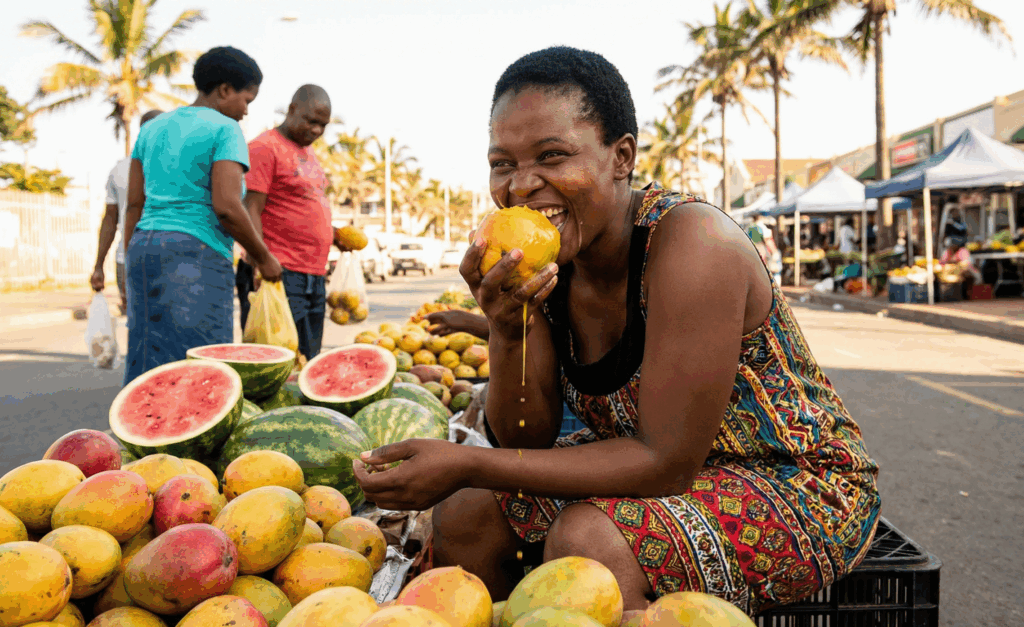
- The “Cheap” List: Watermelon (buy whole, not sliced—it’s cheaper), Mangoes, Peaches, Nectarines, Plums, Grapes, Sweetcorn, Green Beans.
- The “Avoid” List: Citrus (imported), Brussels sprouts, Cauliflower (often pricey/small).
- Thando’s Tip: January is “Mango Month.” Buy a box of mangoes from a street vendor or Fruit & Veg City. Slice them up and freeze them for smoothies. It’s 10x cheaper than buying frozen fruit bags later in the year.
Autumn (March – May)
The Season of Transition.
This is often the best time for eating healthy in SA because you get the tail-end of summer fruits and the start of winter comforts.
- The “Cheap” List: Apples (Granny Smith, Top Red), Pears, Avocados (the season starts kicking in!), Figs, Pomegranates, Pumpkins.
- The “Avoid” List: Berries (prices start climbing), Asparagus.
- Thando’s Tip: This is prime Apple season in the Western Cape. They are crunchy and cheap. Add them to salads with walnuts for a luxury feel on a budget.
Winter (June – August)
The Season of Immunity.
Everyone is coughing. Nature provides Vitamin C.
- The “Cheap” List: Oranges, Naartjies, Grapefruit, Lemons, Avocados (Peak Season!), Cabbage, Spinach, Broccoli, Cauliflower, Sweet Potato, Beetroot.
- The “Avoid” List: Grapes, Stone fruit (Peaches/Plums), Watermelon.
- Thando’s Tip: Avocados are dirt cheap now. I’ve seen 4-packs for R25 in peak winter. Eat them on everything. Healthy fats keep you full and warm.
Spring (September – November)
The Season of Greens.
- The “Cheap” List: Asparagus, Artichokes, Strawberries (late spring), Blueberries, Mulberries, Peas, Lettuce, Cucumber.
- The “Avoid” List: Apples (they have been in cold storage for months now and are floury/expensive).
- Thando’s Tip: Checkers often has massive deals on punnets of blueberries in late Spring. Stock up and freeze.
The “Dirty Dozen” vs. The “Clean Fifteen” (Mzansi Edition)
A big question I get asked is: “Thando, do I need to buy Organic?”
Organic produce at Woolies can cost 30-40% more. For eating healthy in SA, you don’t need to go 100% organic. You just need to be smart about which items you upgrade.
We follow a local version of the “Dirty Dozen” (foods with high pesticide loads) and “Clean Fifteen” (foods with thick skins that don’t need to be organic).
The Dirty Dozen (Spend the Extra Money Here)
These have thin skins, and we eat the whole thing. If you can afford the “Organic” or “Free to Farm” label at Woolies, do it for these:
- Strawberries
- Spinach / Kale
- Nectarines / Peaches
- Apples
- Grapes
- Tomatoes
- Potatoes (Root veggies absorb soil contents)
The Clean Fifteen (Save Your Money Here)
These have thick skins that you peel off. Buy the standard class at Checkers or street vendors. No need for organic.
- Avocados (Thick skin protects the fruit)
- Pineapples
- Onions
- Sweet Corn
- Papayas
- Mangoes
- Cabbage
- Bananas
Protein: The Most Expensive Component
When eating healthy in SA, the meat aisle is where the budget usually dies.
The “Plant-Forward” Strategy
Meat in South Africa is becoming a luxury item. The smartest way to eat healthy is to reduce meat consumption, not eliminate it.
- Lentils and Beans: A 500g bag of dry brown lentils costs approx R20 and makes about 1.5kg of cooked food. Use them to “bulk up” your mince. If you are making Bolognese, use 250g beef and 250g lentils. You halve the cost and double the fibre.
- Canned Fish: Pilchards and Tuna are underrated superfoods. High in Omega-3 and protein.
The Chicken Run
- Woolies: Their Free Range chicken is arguably the best tasting, but you pay for it.
- Checkers: Their “Simple Truth” Free Range chicken is often R10-R20 cheaper per kg.
- Hack: Buy whole chickens. A whole bird costs R80-R100. Two breast fillets cost R70. Learn to roast a chicken. You get dinner, plus leftover meat for sandwiches, plus bones for stock.
Sustainable Seafood
We love our hake and calamari. But please, check the SASSI List.
- Green: Go for it (Hake is usually green).
- Orange: Think twice.
- Red: Don’t buy.Both Woolies and Checkers are generally good at labeling this, but Woolies is stricter with their Fishing for the Future initiative.
Pantry Essentials: The Unsung Heroes
You can’t live on fresh salads alone. A stocked pantry is the backbone of eating healthy in SA.
Pantry Essentials: Healthy & Budget-Friendly
| Item | Why it’s Essential | Best Place to Buy |
|---|---|---|
| Rolled Oats | The ultimate cheap breakfast. Low GI. | Checkers (Bulk bag) |
| Peanut Butter | Healthy fats and protein. “No Sugar Added”. | Woolies (1kg tub) |
| Canned Chickpeas | Instant salads, roasted snacks, or hummus. | Checkers (House brand) |
| Olive Oil | Essential for cooking. | Checkers (20% off sales) |
| Popcorn Kernels | The cheapest healthy snack. Air pop it. | Any supermarket |
| Frozen Peas | Adds protein/colour to any meal instantly. | Checkers |
The Loyalty Program Hack: Vitality HealthyFood
I cannot write about eating healthy in SA without mentioning the Discovery Vitality “HealthyFood” benefit. If you are on Discovery Bank and Vitality, you can get up to 75% back on healthy food items at Woolworths and Checkers.
How to Maximize It:
- Activate it: Make sure you have selected your primary partner (Checkers or Woolies).
- The Catalog: Not everything is covered. Usually, it’s fresh fruit, veg, healthy oils, legumes, and lean proteins. Ice cream is not healthy food (sadly).
- The Strategy: Do your “Healthy Shop” at your partner store to max out your R2000/R4000 monthly cap. Do your “Cleaning/Toiletries Shop” elsewhere so it doesn’t eat into your cap.
Note: If you aren’t on Vitality, ensure you are swiping your Checkers Xtra Savings card. The “Just for You” deals often give 20% off the items you buy frequently.
Meal Prep: The Secret Weapon against Load Shedding
In South Africa, we don’t just meal prep for health; we meal prep for Eskom. You cannot cook healthy food when the power cuts at 6 PM.
Thando’s Sunday Ritual:
- Roast a Tray of Veg: Butternut, peppers, onions, sweet potato. Keep in a Tupperware. Add to salads, wraps, or omelets during the week.
- Boil Eggs: The perfect portable protein snack.
- Cook a Grain: A pot of quinoa, brown rice, or couscous.
- Wash and Chop Greens: Wash your spinach and lettuce, dry it thoroughly (paper towel is key), and store it. It makes throwing a salad together take 2 minutes instead of 10.
The Freezer is Your Friend:
- Frozen veggies (stir fry mix, spinach, corn) are often more nutritious than fresh because they are frozen at the moment of picking.
- They are also pre-chopped.
- They don’t rot in your fridge when you decide to order UberEats on Wednesday.
Sample Weekly Menu (Budget-Friendly)
Here is what eating healthy in SA looks like on a normal salary:
- Monday: Meat-free. Lentil Bolognese with whole wheat pasta. (Cost: Low)
- Tuesday: Pan-fried Hake (frozen box) with sweet potato wedges and coleslaw. (Cost: Medium)
- Wednesday: Roast Chicken (the whole bird) with roast veg. (Cost: Medium)
- Thursday: Chicken Salad (using leftover roast chicken) with spinach, avo, and cucumber. (Cost: Low)
- Friday: Homemade Pizzas using whole wheat wraps as bases. Top with tomato paste, cheese, and leftover veggies. (Cost: Low)
- Saturday: Braai (Chicken wings and boerewors) with a massive green salad.
- Sunday: “Musgo” (Must Go). A stir fry using whatever veggies are left in the fridge + eggs.
Health is Wealth
There is a misconception that eating healthy in SA is reserved for the yoga moms of Sea Point or the executives of Sandton. That is simply not true.
By shopping seasonally, leveraging the Checkers/Woolies competition, and cooking simple meals at home, you can feed your body the best fuel available.
Remember, every R100 you spend on good nutrition today is R1000 you save on medical bills later. Treat your body like the asset it is.
What is your favorite budget health hack? Are you Team Woolies or Team Checkers? Let me know in the comments!
FAQ: Eating Healthy in SA
Q: Is frozen produce as healthy as fresh?
A: Yes! In fact, sometimes it is healthier. Frozen vegetables are picked at peak ripeness and flash-frozen, locking in nutrients. “Fresh” veggies might sit on a truck and a shelf for days, losing nutrients. For soups, stews, and smoothies, frozen is the way to go for eating healthy in SA.
Q: What is the cheapest superfood in South Africa?
A: Chicken livers or Sardines (Pilchards). Organ meats are incredibly nutrient-dense (iron, Vitamin A) and very cheap. Pilchards are packed with Omega-3s. If you can’t stomach the taste, hide them in curries or pasta sauces.
Q: How do I stop fresh veggies from rotting so fast?
A: Moisture is the enemy. Line your veggie drawers with paper towels to absorb excess moisture. Store herbs like a bouquet of flowers (stems in water). Keep bananas away from other fruit (they release gas that ripens everything else).
Q: Is the Woolies “Carb Clever” range worth the money?
A: If you are strictly Banting/Keto and don’t have time to cook, yes. The ingredients are clean. However, it is much cheaper to make your own cauliflower mash or zucchini noodles at home. You are paying for the convenience.
Q: Can I eat healthy on a student budget?
A: Absolutely. Focus on the “Holy Trinity” of cheap health: Oats, Eggs, and Apples. Add peanut butter and canned tuna. Drink water (tap water in SA cities is generally excellent) instead of buying cool drinks.