
Investing in Agriculture: Crowdfunding Livestock and Crops
Investing in Agriculture via crowdfunding allows South Africans to own cows and crops. Johan Vorster analyzes the returns, risks, and platforms like Livestock Wealth.
There is a latent farmer inside almost every South African. It doesn’t matter if you work in a glass tower in Sandton or a tech startup in Cape Town; at some point, you have looked at a farm and thought, “I would love to own a piece of land.”
We have a deep cultural connection to the soil. We understand that wealth, historically, was measured in cattle and crops. But the barriers to entry for traditional farming are incredibly high. You need millions of Rands for land, expensive machinery like John Deere tractors, and the specialized knowledge to navigate droughts, pests, and volatile market prices. For 99% of the population, owning a farm is a pipe dream.
However, the fintech revolution has brought the farm to your smartphone.
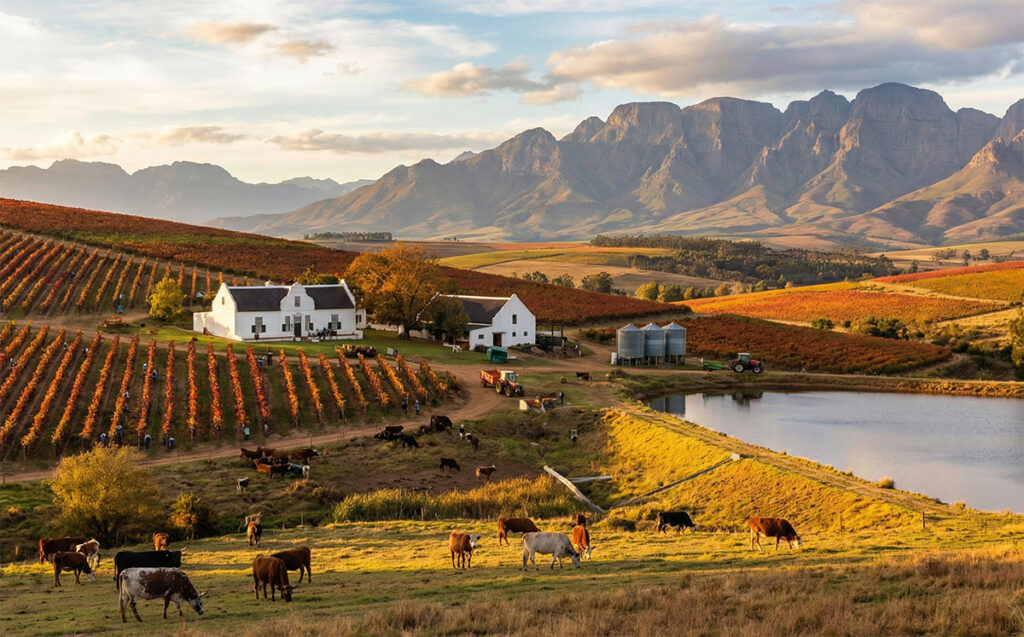
This is the era of Investing in Agriculture through crowdfunding. It is a phenomenon often called “Crowd-farming” or “Impact Farming.” It allows you to buy a single cow, a blueberry bush, or a beehive, while a professional farmer manages the asset on your behalf. When the harvest comes in or the calf is sold, you get the profit.
It sounds romantic. It sounds profitable. But is it safe?
As an investment analyst, I have watched this sector explode in popularity. South Africans are pouring millions into these platforms. In this detailed guide, we will move past the marketing hype of “owning a farm in your pocket.” We will analyze the real returns, the biological risks that no app can fix, and whether investing in agriculture via crowdfunding belongs in your portfolio.
To understand how alternative assets like this fit into a diversified strategy, I strongly recommend you first read our foundational pillar: The Ultimate Guide to Investing in South Africa.
The Concept: The Uber of Farming
To understand investing in agriculture via crowdfunding, you have to stop thinking like a stock market investor and start thinking like a partner.
In a traditional investment (like an ETF), you buy shares in a company. In crowd-farming, you are buying a specific, tangible asset.
How it works:
- The Platform: A company (like Livestock Wealth or Fedgroup Impact Farming) identifies a trusted farmer who needs capital to expand their herd or plant more crops.
- The Capital: Instead of borrowing from a bank at high interest rates, the farmer lists the assets on the platform.
- The Investor (You): You buy the asset. You might pay R12,000 for a pregnant cow or R300 for a blueberry bush.
- The Process: The farmer looks after your asset. They feed the cow, water the bush, and manage the veterinary bills (often covered by your initial investment).
- The Payout: When the calf is weaned and sold, or the berries are harvested and exported, the revenue is split. You get your capital back plus a profit, and the farmer takes a cut.
It is a symbiotic relationship. The farmer gets cheaper capital; you get exposure to the agricultural sector without getting your boots dirty.
The Players: Who Can You Trust?
The South African market has been a pioneer in this space globally. We have several established platforms that have moved investing in agriculture from a niche experiment to a mainstream asset class.
1. Livestock Wealth
Founded by Ntuthuko Shezi, this platform made headlines by allowing people to invest in cows. They have since expanded to macadamia nuts and citrus. They are regulated and have paid out millions to investors. Their “Free Range Ox” and “Pregnant Heifer” products are iconic in the local market.
2. Fedgroup Impact Farming
Fedgroup is a diversified financial services provider, not just a startup. Their app allows you to invest in blueberry bushes, moringa trees, beehives, and solar panels for farms. Because they are a larger financial institution, many conservative investors feel safer here.
3. SV Capital
A newer entrant that brings a similar model to cattle investing, often with a focus on shorter-term cycles (like backgrounding calves for the feedlot).
Johan’s Warning: Always check if the platform is an Authorised Financial Services Provider (FSP) with the FSCA. There have been scams in the crypto/agri space pretending to be crowd-farming. If they are not registered with the FSCA, do not send them a cent.
The Returns: Is It Worth It?
Let’s talk numbers. Why would you choose investing in agriculture over a standard bank fixed deposit?
The answer is Yield.
Typically, these platforms target returns of 10% to 14% per annum.
- Bank Deposit: roughly 7% to 8%.
- Inflation: roughly 5% to 6%.
- Farming: 12% (Target).
On paper, this looks excellent. You are beating inflation by a healthy margin. However, unlike a bank deposit, this return is not guaranteed. It is a target based on the selling price of beef or the export price of macadamias.
The Commodity Cycle: If the global price of macadamia nuts crashes (as it did recently due to oversupply), your returns will drop. If there is a drought and feed costs rise, the profit margin on your cow shrinks. When investing in agriculture, you are taking on commodity price risk.
The Risks: Biological and Environmental
This is the section most marketing brochures gloss over. When you buy a digital certificate on an app, it is easy to forget that you own a living, breathing organism.
Real-world farming is brutal. Here are the specific risks you face when investing in agriculture:
1. Biological Risk (Disease and Death)
Your cow can die. It is that simple. Most reputable platforms (like Livestock Wealth) include insurance in the purchase price. If your specific cow dies, the insurance pays out your capital.
- The Catch: Insurance usually covers the capital (what you paid), not the profit (what you hoped to earn). You might wait 12 months only to get your money back with zero return.
- Biosecurity: Outbreaks like Foot and Mouth Disease (FMD) can stop exports. If South Africa bans beef exports, the local price crashes, and your investment return evaporates.
2. Climate Risk (The Weather)
Farming is a slave to the weather.
- Drought: Requires farmers to buy expensive feed because the grass has died. This increases costs and lowers profits.
- Floods: Can wash away crops or damage infrastructure. While Fedgroup’s solar panels or hydroponic tunnels mitigate some of this, outdoor livestock farming is always exposed to the elements.
3. Liquidity Risk (The Lock-in)
This is critical for your financial planning. Investing in agriculture is illiquid.
- You cannot “sell” your cow halfway through the pregnancy.
- You cannot “sell” your blueberry bush in the middle of winter. Your money is locked away for the duration of the cycle (usually 6 months to 6 years, depending on the asset). If you have a financial emergency, you cannot access this cash. Do not put your emergency fund into a cow.
The Tax Implications: Farming Income
How does SARS view your farm profits?
Many investors mistakenly think this falls under Capital Gains Tax (CGT). Generally, profits from investing in agriculture schemes are treated as Income.
- You purchased an asset to generate a yield.
- The payout is seen as profit/income.
- Therefore, it is added to your taxable income and taxed at your marginal rate.
Note: Unlike REITs or interest, there are no specific “farming exemptions” for retail investors in these schemes. Always consult a tax practitioner, but assume you will pay full income tax on the gains.
Asset Allocation: Where Does a Cow Fit?
If you are building a robust portfolio, where do you put “Assets that Moo”?
I classify investing in agriculture as “Alternative Investments.” It sits in the same bucket as Private Equity, Art, or Crypto. It is non-correlated to the stock market.
Why is non-correlation good? When the JSE crashes because of a US recession, your cow keeps eating grass. It doesn’t care about the S&P 500. It continues to grow. This provides a genuine buffer in your portfolio.
Johan’s Recommended Allocation:
- Conservative: 0%.
- Balanced: 5% max.
- Aggressive: 10% max.
Do not make the mistake of thinking this is a substitute for a savings account. It is a high-risk, high-reward alternative asset.
Smart Agri: The Rise of Solar Farming
A new trend within investing in agriculture is the shift toward infrastructure. Fedgroup Impact Farming allows you to invest in solar panels that are installed on farms.
- The Logic: Farmers have huge roofs (packing sheds) and high electricity bills.
- The Investment: You buy the panel. The farmer rents the electricity from you (cheaper than Eskom).
- The Benefit: This removes biological risk. A solar panel doesn’t get Foot and Mouth Disease. It doesn’t need rain. It just needs sun. For investors who want the “Impact” label but fear the “dead cow” scenario, solar farming is often a safer entry point.
A Tangible Connection
There is something undeniably satisfying about driving past a farm in the Midlands or Mpumalanga and thinking, “I own stock there.”
Investing in agriculture through crowdfunding has democratized access to the food value chain. It allows you to support local food security, help a farmer expand, and earn an inflation-beating return.
However, you must respect the risks. This is not a guaranteed deposit. It is a venture into the real economy, with all the mud, rain, and unpredictability that comes with it.
If you are willing to lock your capital away for 12 to 24 months and can handle the risk that your returns might fluctuate with the price of beef or berries, it is a fantastic diversifier. It connects your money to the land in a way that a bank screen never can.
But please, don’t bet the farm on it. Keep your core wealth in diversified global ETFs, and use the cows for that extra bit of local alpha.
Your Next Step: Visit the Livestock Wealth or Fedgroup website. Create a free profile (no deposit needed) and browse the “Assets for Sale.” Read the “Fact Sheet” for a Pregnant Heifer or a Blueberry Bush to understand the specific timeline and projected cash flow before you commit a single Rand.