
Tourism as an Economic Driver: Post-Pandemic Recovery
Discover how tourism acts as a vital economic driver in South Africa. Lesedi Dlamini analyzes the post-pandemic recovery, job creation, and what the return of international travelers means for your wallet.
When we think of South Africa’s economy, we often visualize the deep mine shafts of the Rustenburg platinum belt or the bustling automotive assembly lines in the Eastern Cape. Yet, there is an economic engine that relies not on digging or manufacturing, but on the sheer, breathtaking beauty of our land. Tourism as an Economic Driver is often undervalued in the boardroom conversations of high finance, but for the waiter in Camps Bay, the game ranger in Mpumalanga, and the Uber driver in Sandton, it is the difference between poverty and prosperity.
As we navigate through 2026, the sector is no longer just “recovering” from the devastating silence of the pandemic years; it is evolving. The return of the international traveler is not just a morale booster; it is a critical injection of foreign currency into our banking system.
In this deep dive, part of our broader South Africa Economic Overview, we unpack the mechanics of the tourism economy. We move beyond the glossy travel brochures to understand the hard economics of leisure: how a German tourist buying a coffee in Cape Town helps stabilize the Rand, creates jobs for unskilled youth, and ultimately affects the cost of living for us all.
The “New Gold”: Why Tourism Matters
To understand the scale of Tourism as an Economic Driver, we must stop thinking of it as a “nice-to-have” holiday industry and start viewing it as an export sector. When we sell a ton of coal to China, we ship the coal out, and money comes in. When we sell a holiday to a family from the UK, the “product” (the experience) stays here, but the money still flows in. It is an “invisible export.”
Before the pandemic, tourism contributed roughly 8% to 9% of South Africa’s Gross Domestic Product (GDP) and employed nearly 1.5 million people directly and indirectly.
- The Foreign Exchange (Forex) Hero: Tourism is one of our largest earners of foreign currency. When tourists swipe their cards to pay for hotels, meals, and curios, they are effectively buying Rands with Dollars, Pounds, and Euros. This demand for the Rand helps to strengthen our currency, which, as we know, helps keep the price of imported fuel and technology lower.
Lesedi’s Economic Insight: The Renewable Resource
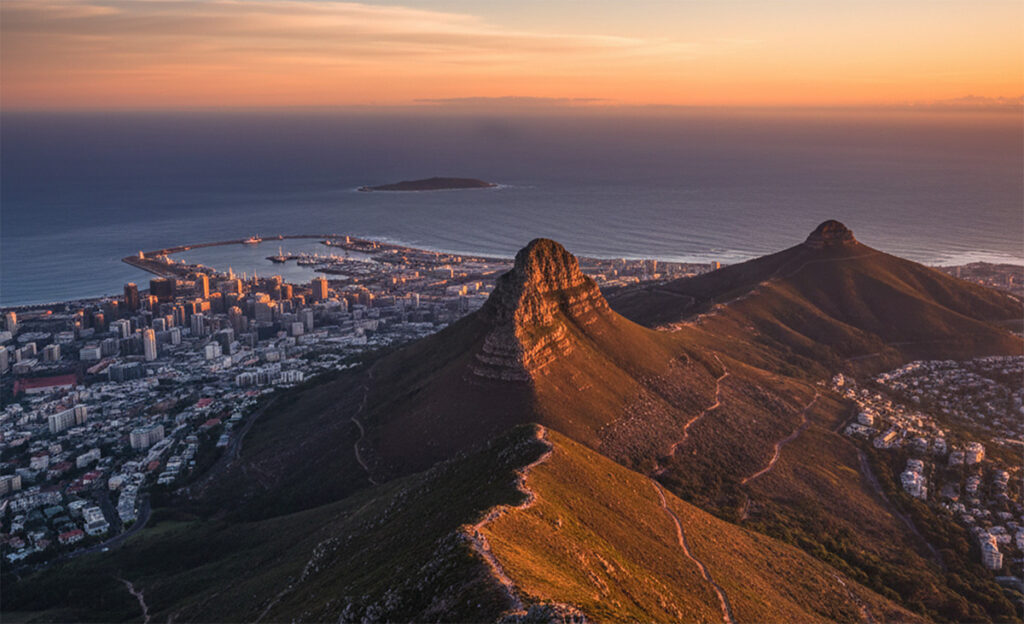
Unlike gold or coal, which eventually run out, Table Mountain and the Kruger National Park are renewable resources. As long as we protect them, they can generate income forever. A mine has a lifespan; a destination, if managed well, has a legacy.
The Crash and The Comeback: A 2026 Status Report
We cannot talk about the recovery without acknowledging the crash. The pandemic years (2020-2021) were catastrophic. The “hard lockdown” turned off the tap of international revenue overnight. Hotels closed, airlines were grounded, and hundreds of thousands of jobs evaporated.
However, the resilience of the South African sector has been remarkable.
- The 2026 Numbers: According to recent data from Statistics South Africa (StatsSA), international arrivals have not only reached pre-pandemic levels but are showing signs of surpassing them in key markets.
- The Shift: We are seeing a change in who is coming. While our traditional markets (UK, USA, Germany) remain strong, there is a surge in arrivals from India and China, driven by our BRICS partnerships.
- Domestic Resilience: One positive legacy of the pandemic is that South Africans learned to explore their own backyard. “Sho’t Left” isn’t just a slogan anymore; domestic tourism now provides a stable “base load” of revenue for the industry, protecting it against seasonal fluctuations in international arrivals.
The Economic Mechanics: How Tourism Feeds the Economy
How does Tourism as an Economic Driver actually work on the ground? It operates through a powerful economic principle called the Multiplier Effect.
1. Direct Spend vs. Indirect Spend
When a tourist pays R5,000 for a night at a lodge, that is “Direct Spend.” But the lodge doesn’t keep all that money.
- They pay the laundry company (Indirect Spend).
- They buy vegetables from a local farmer (Indirect Spend).
- They pay a local construction firm to thatch the roof (Indirect Spend).
2. Induced Spend (The Wallet Effect)
The most magical part is “Induced Spend.” The receptionist at the lodge uses her salary to buy school shoes for her child at the local shop. The shop owner uses that profit to pay for a taxi. The taxi driver buys fuel.
- The Result: That single R5,000 booking circulates through the community multiple times, creating value at every step. This is why tourism is so effective at fighting poverty in rural areas where there are no factories or mines.
3. Employment Intensity
Tourism is a labor-intensive industry. You cannot automate a game drive, and a robot cannot replace the warmth of South African hospitality.
- Low Barrier to Entry: Crucially, tourism provides entry-level jobs for youth and women who may not have tertiary degrees. A young person can start as a porter or a waiter and, with training, move up to become a hotel manager or a certified guide. It is a ladder of opportunity.
Trends Shaping the 2026 Season
The post-pandemic traveler is different. They are more conscious, more digital, and stay longer.
“Bleisure” and Digital Nomads
The lines between business and leisure have blurred. Executives coming for a conference in Sandton are tacking on four days for a safari. Furthermore, South Africa has become a hotspot for “Digital Nomads”—remote workers earning Dollars but spending Rands.
- Economic Impact: These visitors stay for months, not weeks. They rent apartments, buy groceries, and join gyms, integrating deeply into the local economy.
Township and Cultural Tourism
Tourists are increasingly seeking “authentic” experiences beyond the Big 5. Township tourism in Soweto (Vilakazi Street), Langa, and Umlazi is booming.
- The Benefit: This decentralizes the wealth. Instead of money staying in five-star enclaves, it flows directly into township Spaza shops, local taverns, and home-based Airbnbs, empowering the Informal Economy.
Eco-Tourism and Sustainability
Travelers are willing to pay a premium for sustainability. Lodges that are off-grid, use solar power, and support local conservation are seeing higher occupancy rates. This aligns perfectly with South Africa’s push towards a Green Economy.
The Barriers to Boom: What’s Holding Us Back?
Despite the success, Tourism as an Economic Driver is driving with the handbrake on. In 2026, we still face structural challenges that prevent us from reaching our full potential of 15-20 million arrivals.
1. The Visa Debacle
The Department of Home Affairs continues to struggle with visa processing times for key markets like India, China, and Nigeria.
- The Cost: If a tourist cannot get a visa easily, they simply go to Kenya or Thailand instead. The Tourism Business Council of South Africa (TBCSA) estimates that visa inefficiencies cost the country billions in lost revenue every year.
- The Solution: The implementation of a fully digitized e-Visa system is critical. While progress has been made, glitches remain a major deterrent.
2. Safety and Security
We cannot ignore the elephant in the room. Crime—or the perception of crime—remains the number one deterrent for potential visitors.
- The Impact: When a tourist is attacked, the headline goes global. This forces the industry to spend millions on private security and reputation management, money that could be spent on marketing or training.
3. Airlift Capacity
While international flights have returned, the cost of flying remains high due to global fuel prices and limited competition on certain routes. Domestic airlift is also constrained following the demise of several local low-cost carriers in previous years, making it expensive to travel between secondary cities.
Impact Analysis: The Tourist Dollar vs. Your Pocket
Tourism & Your Town: The Economic Wave
| The Event | The Macro Impact | The Micro Impact (You) |
|---|---|---|
| High Tourist Season (Dec-Feb) | Inflow of forex strengthens Rand. | Side Hustle: Temporary jobs/tips rise, but accommodation gets pricier. |
| Visa Backlogs Cleared | Increased arrivals from key markets. | Business Boost: More volume for local tour operators and drivers. |
| Major Global Event | Spike in GDP growth for quarter. | Rental Gold: Airbnb income skyrockets; infrastructure upgrades. |
| Travel Advisory Warning | Cancellations and drop in forex. | Job Risk: Layoffs in hospitality sector; weaker Rand. |
Strategies to Capitalize on the Boom
You don’t need to own a hotel to benefit from Tourism as an Economic Driver. Here is how the average South African can participate:
- The Sharing Economy: If you have a spare room or a granny flat, list it on platforms like Airbnb or Booking.com. With the return of international travelers, short-term rentals can generate significant secondary income.
- Experience Hosting: Do you know the best street art spots in Maboneng? Can you cook a traditional Cape Malay curry? Platforms like Airbnb Experiences allow you to sell your knowledge and culture directly to tourists for cash.
- Transport Services: If you have a reliable vehicle, the demand for Uber and private transfers peaks during the tourist season. It is a viable “side hustle” for December and January.
- Invest in Leisure Stocks: For those with a longer horizon, look at JSE-listed companies in the hotel and gaming sectors. Read our South Africa Economic Overview for more on how to identify investment trends.
FAQ: Understanding the Tourism Economy
1. Why is Cape Town so expensive in December?
It is basic supply and demand. When millions of international tourists (with strong currencies) and local holidaymakers descend on one city, the demand for accommodation and restaurants outstrips supply, driving prices up.
2. Is the government doing enough to support tourism?
The National Department of Tourism has several support programmes, such as the Tourism Transformation Fund. However, the private sector often argues that the government needs to do more to fix the “enablers”—specifically visas, safety, and transport infrastructure.
3. How does a weak Rand affect tourism?
A weak Rand is actually “good” for inbound tourism because it makes South Africa a cheap destination for Americans and Europeans. They get a luxury holiday for a fraction of the cost of going to Europe. However, it makes it very expensive for South Africans to travel overseas.
The Business of Beauty
Tourism as an Economic Driver is the most inclusive industry we have. It distributes wealth from the rich global north to the rural global south faster than almost any aid program.
For South Africa, the post-pandemic recovery is not just about filling hotel beds; it is about rebuilding our national brand. Every tourist who returns home with a story of our warmth, our wildlife, and our culture becomes an ambassador for our economy.
As we look to the future, the goal is clear: we must treat tourism with the same strategic importance as mining or finance. By fixing the visa issues, securing our streets, and embracing the digital traveler, we can turn our natural heritage into a sustainable economic future for all. The gold is no longer just in the ground; it is in the sunset over the Atlantic and the roar of the lion in the bush.