
LinkedIn Strategy: Building a Personal Brand in the SA Corporate World
Learn to build a powerful personal brand, hack the algorithm, and attract South African recruiters.
In the corridors of corporate South Africa, from the glass towers of Sandton to the tech hubs of Stellenbosch, a quiet revolution has taken place. The traditional “apply and wait” method of job hunting is dying. In 2026, LinkedIn is not just a digital CV repository; it is a 24/7 networking event where careers are made, headhunters scout talent, and business deals are closed.
With over 12 million South African users, LinkedIn is the primary database for recruiters. If you are not visible here, you are invisible to the “Hidden Job Market”—the 70% of senior roles that are never advertised on job boards but are filled through referrals and direct searching. To understand why this shift has happened, you first need to grasp the broader economic trends we discussed in our guide on navigating the South African job market.
This article is your strategic blueprint for transforming your LinkedIn presence from a static profile into a dynamic personal brand that attracts opportunities while you sleep.
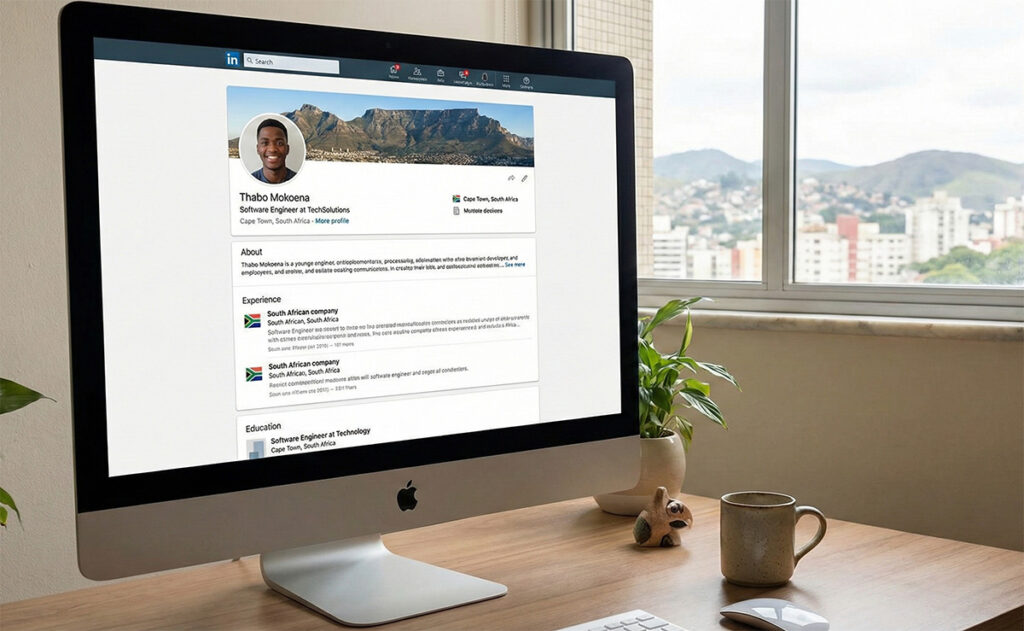
Phase 1: The Profile Audit (Your Digital Shop Front)
Think of your profile as prime real estate. If a recruiter lands on your page, you have roughly three seconds to convince them to click “Read More.”
The Visuals: Profile Picture and Banner
- The Photo: This is your first impression. In the South African context, we value professionalism but also warmth. Avoid stiff, passport-style mugshots. Also, avoid photos cropped from a wedding (we can see the hand on your shoulder). Invest in a professional headshot with good lighting.
- The Banner: The grey default background is a wasted opportunity. Use this space to visually communicate what you do. Are you a Civil Engineer? Show a site. Are you a Speaker? Show an audience. Are you in Finance? Use a clean, branded graphic with your value proposition.
The Headline: The SEO Hook
Your headline follows you everywhere—when you comment, when you post, and in search results. “Accountant at ABC Corp” is a job title, not a brand.
- The Formula:
Role | Industry/Speciality | Unique Value Proposition - Example: Senior Financial Manager | FMCG & Retail Strategy | Optimising Cash Flow for High-Growth SA Brands
The “About” Section: Your Story
This is not a summary of your skills (that comes later). This is your story. Write in the first person (“I”).
- The Hook: Start with a problem you solve. “In a volatile economic climate, businesses bleed cash through inefficient supply chains. That is where I step in.”
- The Body: Explain your journey, your philosophy, and why you love what you do.
- The Call to Action (CTA): Tell them what to do next. “Open to networking with fellow logistics professionals. Drop me a DM.”
Phase 2: Content Strategy (From Consumer to Creator)
Most users are “lurkers”—they read but never post. To build a brand, you must contribute. You do not need to be an influencer; you just need to be a Thought Leader in your niche.
What to Post? (The 3 Es)
- Education: Share a tip relevant to your industry. “3 things I learned about the new SARS tax directives today.”
- Experience: Share a lesson from your career. “I used to think leadership was about control. My team taught me it is about removing obstacles.”
- Engagement: Ask questions. “South African HR pros, are you seeing a return to the office or is hybrid here to stay?”
The “South African Context” Angle
Localise your content. Discussing global trends is fine, but applying them to the local market makes you relevant. If you talk about AI, talk about how it impacts South African banking. If you talk about logistics, mention the Durban port challenges. This signals that you are plugged into the local reality.
Zama’s LinkedIn Secret: Consistency beats intensity. Posting once a day for a week and then disappearing for a month kills your momentum. Aim for 2 to 3 high-quality posts per week. Tuesday, Wednesday, and Thursday mornings (08:00 – 10:00 SAST) are generally the highest engagement windows in SA.
Phase 3: Networking (The “Coffee Chat” Strategy)
Connecting with people is an art. Sending a blank connection request to a CEO is “spam.” Sending a personalised note is “networking.”
The Connection Script
Always add a note.
- “Hi Thabo, I read your recent article on renewable energy trends in the Northern Cape and found your point on storage capacity fascinating. I would love to connect and follow your work.”
Engaging with Decision Makers
Do not DM a recruiter asking, “Do you have any jobs?” Instead, engage with their content. Comment on their posts with insightful thoughts. After a few weeks of visibility, then reach out.
- “Hi Sarah, I see you recruit heavily in the Fintech space. I am a Python Developer looking for my next challenge. My profile and CV are aligned with the trends you post about. Would you be open to a brief chat?”
While your LinkedIn profile captures attention, your formal CV is what often seals the deal for the interview. Ensure your documents match your digital persona by following our guide on crafting a South African CV: formats recruiters love.
Phase 4: Hacking the Algorithm
LinkedIn wants users to stay on the platform. Understanding this helps you get seen.
- Dwell Time: The algorithm tracks how long people spend reading your post. Long-form text (with “See More”) or PDF carousels often perform better than short links that send people off the site.
- The “Golden Hour”: The first 60 minutes after posting are critical. If your post gets likes and comments quickly, the algorithm pushes it to a wider audience. Reply to every comment immediately.
- No External Links in the Body: LinkedIn hates it when you link to YouTube or a blog in the main post text because it drives traffic away. Put your external link in the comments or your bio.
Phase 5: Managing Your Reputation
Your personal brand is fragile. In South Africa, the corporate world is small. Everyone knows everyone.
- Be Professional: Avoid political rants or aggressive arguments in comment sections. Recruiters can see your activity log.
- Give Recommendations: The best way to get a recommendation is to give one. Write genuine testimonials for colleagues and clients. It shows you are a team player.
- Endorsements: Keep your skills section updated and ask colleagues to endorse your top skills (e.g., Project Management, SQL).
Monday Morning Checklist: The LinkedIn Sprint
You don’t need to spend hours on the platform. dedicate 15 minutes every morning:
- 08:00 – 08:05: Check “Who viewed your profile.” If they are relevant, connect with a note.
- 08:05 – 08:10: Engage. Scroll your feed and leave 3 thoughtful comments on posts by industry leaders.
- 08:10 – 08:15: Post (if it is your day) or share a relevant article with your own takeaway added.
FAQ: LinkedIn in South Africa
Should I pay for LinkedIn Premium?
For most job seekers, the free version is sufficient. Premium is useful if you want to see exactly who viewed your profile or if you need to send InMails to people outside your network. Use the free month trial when you are actively hunting.
Is it okay to post personal content?
Yes, but keep it professional-personal. Posting about your child’s graduation or a charity run humanizes you. Posting about your Friday night party at a club does not.
How do I handle a boss who is watching me?
If you are worried your boss will think you are leaving because you updated your profile, simply turn off “Notify network of changes” in your privacy settings before you do a major overhaul.
Can I hide my profile from my current employer?
You cannot hide your public profile, but you can block specific individuals if necessary. However, having an updated profile is standard professional practice in 2026, not necessarily a sign of leaving.
Building a personal brand takes time, but the ROI is immense. When you position yourself as an authority, opportunities start finding you.