Navigating the Private School Pressure: Is It Worth the Cost?
Navigating the Private School Pressure: Is the high cost worth it? We explore the hidden fees, Model C alternatives, and the "Soft Life" approach to education in SA.
It is 7:00 AM on a crisp Tuesday morning. You are sitting in your car in the drop-off zone.
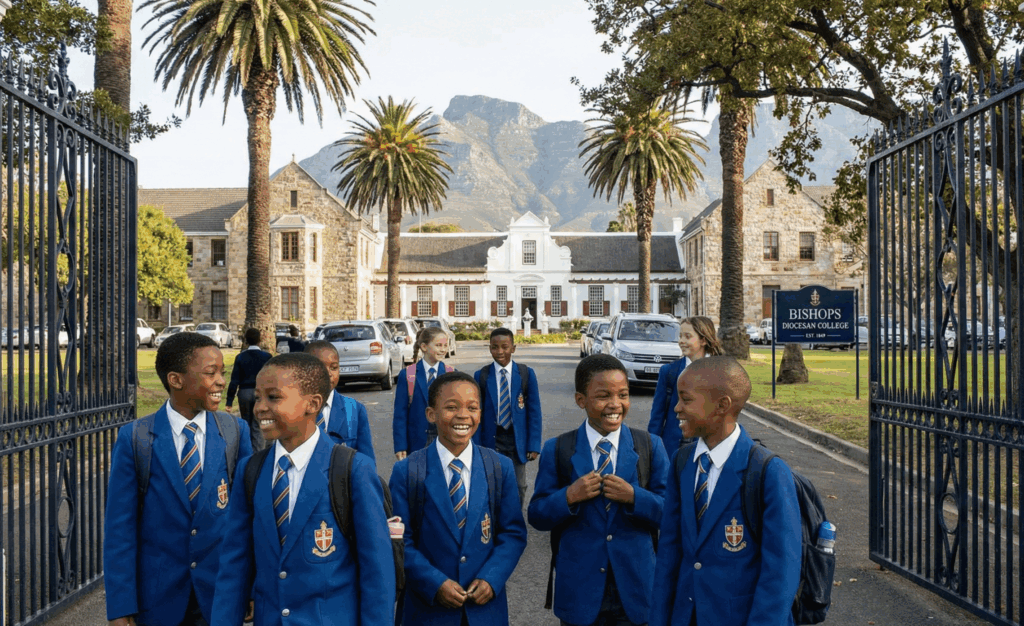
Around you, there is a parade of luxury SUVs. The children spilling out of them look immaculate in their blazers, carrying hockey sticks that cost more than your first car and iPads loaded with educational apps. You watch your own child walk through those imposing gates, and a knot forms in your stomach.
You aren’t worried about their grades. You are worried about the invoice sitting in your inbox.
In South Africa, the school run is more than just a logistical task; it is an emotional and financial battlefield. We have internalized a belief that says: “If I love my child, I must send them to the most expensive school I can barely afford.”
We equate high fees with high future success. We fear that if we miss a payment, or choose a “lesser” school, we are somehow failing them.
But today, I want to invite you to put down that heavy burden. I want to open a softer, more honest conversation about Navigating the Private School Pressure: Is It Worth the Cost?
As Thando, your City Insider, I have seen the spreadsheets and the stress levels of families across Mzansi. I have seen parents work themselves to the bone to pay for prestige, missing out on the actual joy of parenting.
Let’s take a deep breath. Let’s look at the numbers, the options, and the heart of what education really means.
The “Prestige” Trap: Understanding the Anxiety
Why are we so obsessed with private schools in South Africa? To understand the pressure, we have to understand the context.
We live in a country with a complex educational history. For many parents, especially those who were denied opportunities in the past, sending their child to a top-tier private school is a powerful symbol of progress. It is a way of saying, “My child will have everything I didn’t.”
It is an act of love.
However, this love has been capitalized on. The private education sector in South Africa is a massive business. Marketing campaigns are designed to trigger your insecurities. They promise that their crest on a blazer guarantees entry to Ivy League universities and a CEO title by age 30.
But here is the gentle truth: A school is a facilitator, not a manufacturer. A R200,000 per year school cannot manufacture ambition, kindness, or resilience in a child. Those things are nurtured at home.
When we realize that we are the primary architects of our children’s future, the pressure to pay for a specific brand name starts to fade.
The Financial Reality Check: The “Iceberg” Costs
Let’s talk money, but let’s do it calmly.
When you look at a school’s brochure, you see the annual tuition fee. Let’s say it’s R150,000. You divide that by 12 and think, “Okay, R12,500 a month. It’s tight, but we can eat less takeout.”
But the tuition is just the tip of the iceberg. Beneath the surface lies the “Lifestyle Tax” of private education.
1. The “Keeping Up” Costs
In elite environments, the peer group sets the spending standard.
- Birthday Parties: It’s not just cake and a jumping castle. It’s a hired venue, entertainers, and personalized gift bags.
- Technology: “Mom, everyone has the iPhone 15. I can’t be the only one with the 12.”
- Socializing: Weekend outings aren’t just walks in the park; they are movies, malls, and restaurants.
2. The Extracurricular Levy
- Tours: The First XI hockey team isn’t playing in the next suburb; they are touring Argentina or the Netherlands. These tours can cost R40,000+.
- Gear: The specific brand of cricket bat, the specific astroturf shoes, the specific ballet leotard.
- Tuition: Even at expensive schools, many parents still pay extra for private maths tutors because the academic pressure is so high.
If you are struggling to balance these demands with your own need for a peaceful life, I strongly urge you to read my guide on The Art of Living Well in South Africa: Balancing Comfort, Culture, and Cost. It will help you audit your finances and reclaim your sanity.
The Alternative: The Rise of the “Former Model C”
Here is the best-kept secret in South Africa: You don’t need to go private to get a world-class education.
South Africa has a unique tier of schools known as “Former Model C” schools. These are government schools that are fee-paying and run by their School Governing Bodies (SGBs).
Think of schools like Westerford (Cape Town), Parktown Girls (Joburg), Westville Boys (Durban), or Pretoria Boys High.
The Comparison:
- Private School Fee: Approx R160,000 – R250,000 per year.
- Model C Fee: Approx R40,000 – R65,000 per year.
The Difference: Academically? Often negligible. Many top government schools consistently outperform private schools in the matric results. They offer music, water polo, rugby, and drama. The difference is often just the exclusivity and the class size (30 kids vs 20 kids).
The “Soft Life” Strategy: Imagine taking the difference—let’s say R120,000 a year—and investing it for your child instead. Over a 12-year school career, that is R1.44 million (excluding interest). By the time your child graduates, you could hand them a fully paid-for university degree and a deposit on an apartment, rather than just a matric certificate from a fancy address.
The “IEB vs. CAPS” Debate
One of the biggest selling points for private schools is the IEB (Independent Examinations Board) curriculum. Parents are told it is “better” than the state’s CAPS / NSC (National Senior Certificate).
Let’s demystify this.
Both write Matric. Both get you into university. Both are recognized internationally.
- IEB: Focuses slightly more on critical thinking and essay writing. It prepares students well for the style of university assessment.
- CAPS: Has improved significantly. Top Model C schools teach the CAPS curriculum but often extend it with their own internal standards that match or exceed the IEB.
The Verdict: A bright child will flourish in either system. A struggling child might actually find the intense academic pressure of a top-tier IEB school overwhelming rather than supportive.
For a deeper technical comparison, you can look at resources like Parent24 which frequently analyzes the matric pass rates of both systems.
The New Player: Online and Hybrid Schooling
The pandemic changed everything. It broke the idea that learning only happens in a classroom between 8:00 AM and 2:00 PM.
For the Digital Nomad family or the child who finds large social groups anxious, online schooling is a valid “Soft Life” option. Schools like UCT Online High School or Curro Online offer structured, high-quality education for a fraction of the cost (often R5,000 – R7,000 pm).
Why it works:
- Flexibility: Your child can learn at their own pace.
- No Bullying: The social environment is controlled.
- Cost: No uniforms, no transport costs, no “building levies.”
It isn’t for everyone—it requires discipline—but it is an option that didn’t exist for our parents. It allows you to spend your budget on experiences (like travel or coding bootcamps) rather than infrastructure.
Evaluating a School: The “Vibe Check” Checklist
If you are currently touring schools, ignore the shiny reception area. Ignore the cappuccino they give you. Look closer.
Here is Thando’s Checklist for finding a school that fits your family’s values (and budget):
- Look at the Kids, Not the Buildings: Are the children walking between classes smiling? Do they look stressed? Do they greet you? The “spirit” of the student body tells you more than the brochure.
- The Staffroom: Do the teachers look happy? High staff turnover is a red flag. A happy teacher makes for a happy classroom.
- Diversity: Does the school reflect the real South Africa? A bubble environment might feel “safe,” but it doesn’t prepare your child for the reality of the workplace or the world.
- The “Hidden” Curriculum: What does the school value? Is it only Rugby and Maths? Or do they celebrate the artist, the chess player, and the kind citizen?
- Traffic: This sounds silly, but it matters. If you spend 2 hours a day in traffic getting to a “better” school, you are losing 10 hours a week of family time. A good school around the corner is often better for mental health than a great school 20km away.
The Investment Perspective: Education Policies vs. Reality
We need to talk about Education Inflation. Education costs in South Africa rise by about 2-4% above standard inflation every year. That means school fees double roughly every 7-8 years.
If you are relying on your monthly salary to cover fees, you are walking a tightrope.
The Strategy:
- Start Early: Even R500 a month into a Unit Trust (like a Satrix Top 40) from the day they are born makes a massive difference.
- Gap Cover: Consider products that cover school fees if you die or are retrenched.
- Grandparents: Instead of toys for birthdays, ask for contributions to the education fund. It takes a village.
The University Question: Does It Matter?
Here is the ultimate question: Does going to Michaelhouse or Roedean guarantee you get into Medicine at UCT?
The Answer: No. Universities look at marks. They do not look at the school crest. A student with 7 Distinctions from a rural school in Limpopo has a better chance of acceptance than a student with 3 Distinctions from the most expensive school in the country.
In fact, some might argue that children who navigate the slightly more chaotic environment of a large government school develop “grit.” They learn to advocate for themselves. They learn to deal with bureaucracy. These are life skills that university (and the corporate world) demand.
Redefining Success: The Soft Life Parent
The most expensive thing you can give your child is not an IEB matric. The most expensive thing you can give them is a calm parent.
If paying for private school means you are working 14 hours a day, constantly stressed about money, and arguing with your partner about finances, the cost is too high. Your child absorbs that anxiety.
The “Soft Life” approach to education says:
- I choose a school that we can comfortably afford.
- I supplement their education with books, travel, and conversation at the dinner table.
- I teach them about money, kindness, and emotional intelligence at home.
- I prioritize our family’s mental health over a brand name.
There is dignity in saying, “We are choosing this Model C school because it allows us to travel as a family in December.” There is wisdom in saying, “We are choosing online schooling because it suits my child’s anxiety.”
Trust Your Child, Trust Yourself
Navigating the private school pressure is really about navigating our own fears. We want to protect our children. We want to give them the best shot at life.
But the “best shot” isn’t bought. It is built.
Whether your child is in a blazer that costs R3,000 or a t-shirt at a homeschool co-op, they have you. Your support, your guidance, and your love are the curriculum that matters most.
So, when you drive past that fancy school with the shiny gates, don’t feel a pang of envy. Feel the freedom of knowing you are making the choice that is right for your family, your wallet, and your peace.
What is your experience with the school selection process? Are you Team Model C or Team Private? Let’s support each other in the comments.
FAQ: Navigating Private School Pressure
Q: Is the IEB curriculum harder than government (CAPS)? A: It is not necessarily “harder,” but it encourages a different style of thinking. IEB exams often require more critical reasoning and application of knowledge, whereas CAPS can be more content-heavy. However, top universities accept both equally.
Q: Are private schools safer? A: Generally, private schools have stricter access control and smaller grounds to monitor. However, many top government schools have excellent security. Safety is also about emotional safety (bullying), which can happen in any school, regardless of fees.
Q: How do I calculate the “real” cost of a school? A: Take the annual tuition fee and add 30%. This buffer covers uniforms, textbooks, stationery, camps, sports tours, electronic devices, and “voluntary” levies. If you can afford the tuition + 30%, you are safe.
Q: What is a “Curro” school? A: Curro is a listed company that runs private schools. They offer different “tiers” of schools, from premium (Curro Select) to more affordable models (Curro Academy). They have disrupted the market by offering private education at various price points.
Q: Should I move my child if I can no longer afford the fees? A: Yes. Financial stability is crucial for a child’s sense of security. Children are resilient. If you explain it gently (“We are moving to a school that allows us to do more fun things as a family”), they will adapt. Staying in a school that bankrupts you causes long-term family trauma.