The Rise of Non-Alcoholic Drinks: Exploring SA’s Sober Curiosity
Discover the rise of non-alcoholic drinks in South Africa. Explore SA's sober curiosity movement, top local brands, and mocktail recipes for a Soft Life.
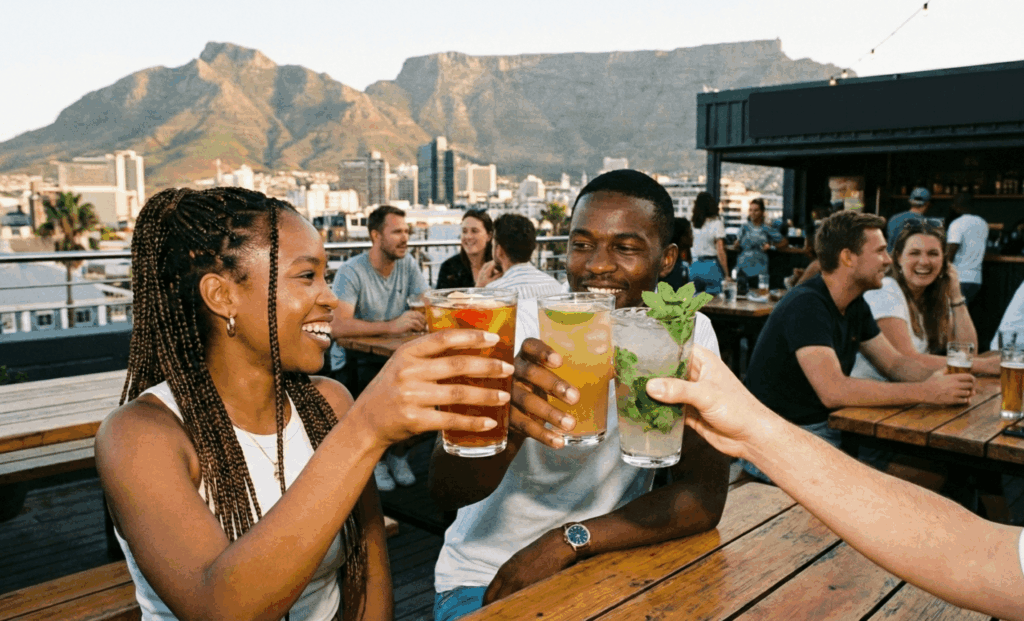
It is Friday afternoon. The golden hour is hitting the Johannesburg skyline, or perhaps painting Table Mountain in shades of purple and orange. You are at a rooftop bar or a friend’s patio. The music is playing—maybe some low-fi Amapiano or a breezy jazz playlist.
The waiter approaches. Usually, this is the moment you might order a double gin and tonic or a craft beer, anticipating the buzz that signals the start of the weekend. But today, you pause. You look at the menu, and instead of the usual suspects, you order a “Virgin Botanical & Tonic” with a slice of grapefruit and a sprig of rosemary.
When it arrives, it looks just as beautiful as a cocktail. The glass is beaded with condensation. The ice clinks musically. You take a sip. It is crisp, complex, and refreshing.
And the best part? You know that tomorrow morning, you will wake up feeling exactly as fresh as you do right now.
This is the new face of socializing in Mzansi. We are witnessing The Rise of Non-Alcoholic Drinks: Exploring SA’s Sober Curiosity.
As Thando, your City Insider, I have noticed a massive shift in the vibe. The question “Why aren’t you drinking?” is being replaced by “Oh, what are you drinking? Can I taste?”
We aren’t talking about drinking warm Coke while everyone else has champagne. We are talking about a sophisticated, flavor-forward movement that prioritizes clarity, health, and wealth. Let’s explore this beautiful new world together.
What is “Sober Curiosity”? (A Gentle Definition)
First, let’s clear the air. “Sober Curious” does not mean you have to be sober forever. It is not a label you have to tattoo on your forehead.
It is simply a mindset. It is the act of questioning your relationship with alcohol. It is asking yourself: “Do I actually want a drink right now, or do I just want to relax?”
In South Africa, where our social culture is so heavily tied to the braai, the pub, and the “sundowner,” choosing not to drink used to feel like an act of rebellion. But now, it feels like an act of self-care.
It fits perfectly into the “Soft Life” aesthetic. Because what is softer than protecting your peace? What is more luxurious than having boundless energy? What is more “rich” than having clear skin and a clear mind?
The Financial Glow-Up: Drinking Your Wealth
Let’s talk about the Rands and Cents, but gently. We all know that “Sin Tax” hits hard every February. Alcohol is expensive.
Consider a standard night out:
- 3 x Double Gin & Tonics: R360
- Uber (because you can’t drive): R200
- Late-night “drunk food”: R150
- Total: R710 for one night.
Now, imagine swapping that for non-alcoholic alternatives.
- 3 x Alcohol-Free G&Ts: R180
- Driving yourself (safely): R50 (fuel)
- Healthy dinner at home: R0 (prepped)
- Total: R230.
That is a saving of nearly R500 per night out. If you do that every weekend, that is R2,000 a month. That’s an investment account. That’s a flight to Durban.
To deeply understand how these small lifestyle shifts compound into massive financial freedom, I highly recommend reading my foundational guide: The Art of Living Well in South Africa: Balancing Comfort, Culture, and Cost. It explains how to redirect this “party money” into “peace of mind money.”
South Africa: The Silicon Valley of Zero-Alc
Here is something to be proud of: South Africa is a global leader in the non-alcoholic revolution. Our local entrepreneurs saw the gap long before the rest of the world caught up.
We have moved so far beyond “Rock Shandy.” Let’s look at the titans of taste that are putting SA on the map.
1. The Duchess (The Pioneer)
Based in Cape Town, The Duchess was the world’s first non-alcoholic gin and tonic in a bottle.
- The Vibe: It tastes like a sophisticated, adult drink. It has the bitterness of gin (thanks to botanicals) without the booze.
- Best For: A sunset picnic on the beach or a sophisticated dinner party.
2. Devils Peak Hero (The Beer Lover’s Choice)
Beer lovers are often the hardest to convince. But Devils Peak Hero changed the game.
- The Vibe: It actually tastes like beer. It has the hops, the foam, and the mouthfeel.
- Best For: The Saturday rugby game. You can crush a six-pack, cheer for the Boks, and drive home legally.
3. Savanna Lemon Non-Alc (The Cider Icon)
Savanna is an institution. Their non-alcoholic version is arguably indistinguishable from the original.
- The Vibe: Crisp, dry, and distinctly South African.
- Best For: A hot braai day. Put a lemon wedge in the neck of the bottle, and you are part of the crew.
4. Lautus (The Wine Alternative)
De-alcoholised wine used to taste like grape juice. Lautus (Latin for “pure” or “elegant”) uses spinning cone technology to remove the alcohol while keeping the wine structure.
- The Vibe: Their Savvy White is crisp and acidic. Their Red pairs well with a steak.
- Best For: Date night when you have an early meeting the next day.
Navigating the Social Scene: The “Soft” Script
The hardest part of The Rise of Non-Alcoholic Drinks isn’t the taste; it’s the peer pressure. In SA, we have a culture of pushing drinks. “Ag, come on, just one!” or “Don’t be boring!”
Here is how to handle it with grace and confidence. You don’t need to be defensive. You just need to be smooth.
The “Health Flex”
- Them: “Why aren’t you drinking?”
- You: “I’ve got a killer hiking session planned for 6 AM tomorrow. I want to be at 100%.” (This signals that you are disciplined and active—very aspirational).
The “Taste Test”
- Them: “Have a beer!”
- You: “I’m actually obsessed with this new alcohol-free IPA right now, I want to see if it’s as good as they say. Want a sip?” (This turns it into a shared discovery).
The “Driver” (Classic)
- Them: “Take an Uber!”
- You: “I actually love the freedom of having my car tonight. I might head to another spot later.” (This signals independence).
Remember, people usually push alcohol because they feel insecure about their own drinking. Your clarity is not a judgment on them. Keep your glass full, keep smiling, and usually, they will move on.
The Sensory Experience: DIY Mocktails
Part of the ritual of drinking is the making of the drink. Cutting the fruit, muddling the herbs, shaking the shaker. You don’t lose that ritual just because you lose the ethanol.
Here are two recipes I’ve created for the Sober Curious South African host.
1. The “Chapman’s Peak Sunset”
This is refreshing, tart, and complex. It looks like a sunset in a glass.
- Ingredients:
- 50ml Rooibos Tea (brewed strong and chilled)
- 100ml Grapefruit Juice (freshly squeezed is best)
- Top up with Tonic Water (try the pink tonic for colour)
- Garnish: A sprig of fresh thyme and a slice of grapefruit.
- Method: Fill a large gin goblet with lots of ice. Pour in the tea and juice. Stir gently. Top with tonic. smack the thyme between your hands to release the oils and place it on top.
2. The “Joburg Jolt” (Spicy & Sweet)
A ginger-forward drink that gives you a little “kick” in the throat, mimicking the burn of alcohol.
- Ingredients:
- 100ml Ginger Beer (Stoney is the classic choice)
- 25ml Lime Cordial
- Fresh Mint leaves
- Slices of fresh cucumber
- A pinch of cayenne pepper (optional, for the brave)
- Method: Muddle the mint and cucumber in the bottom of a highball glass. Add ice. Pour over the lime cordial and ginger beer. Stir. If you want that “burn,” dust the top with the tiniest bit of cayenne.
The Morning After: The Ultimate Reward
If you are on the fence about The Rise of Non-Alcoholic Drinks, the selling point is not the night before—it is the morning after.
There is a specific, quiet joy in waking up on a Sunday morning without a headache. The sun isn’t your enemy; it’s your friend.
- 7:00 AM: You are awake naturally. You feel hydrated.
- 8:00 AM: You are at the farmer’s market, getting the best fresh produce before the crowds arrive.
- 10:00 AM: You have already cleaned your apartment, done your meal prep, and read a chapter of a book.
While your friends are texting in the group chat about “hangxiety” and ordering greasy burgers to survive, you are living. You have gained an entire day of your life back.
That is the definition of the Soft Life. It is reclaiming your time.
The Science of Taste: Why “Alcohol-Free” Tastes Better Now
You might be wondering, “Why does non-alcoholic stuff taste good now, when it used to taste terrible?”
It comes down to distillation technology. In the past, companies just mixed sugary syrups. Now, brands like Abstinence Spirits use hydro-steam distillation. They take real botanicals (buchu, lemon verbena, cassia bark) and extract the oils and flavours just like they would for gin, but without fermenting alcohol.
This means you get the “mouthfeel”—the texture and weight of a drink—and the complex, bitter notes that signal to your brain: “This is an adult drink.”
Your palate adapts, too. When you stop numbing your tongue with alcohol, you start tasting the subtle notes in food and drinks more clearly. Dinner becomes a higher-definition experience.
Creating a “Sober Sanctuary” at Home
If you are hosting, how do you cater to the Sober Curious without just offering water?
The Non-Alc Bar Cart
Curate a trolley or a shelf specifically for zero-alcohol drinks.
- Stock beautiful glassware (crystal tumblers, tall flutes).
- Keep a selection: One sparkling wine, one “gin” alternative, and some premium mixers (Barker & Quin tonics are excellent).
- The Gesture: When a guest arrives, ask: “Would you like a gin and tonic, or a botanical refresher?” treating them as equals.
This makes your non-drinking guests feel seen and valued. It elevates your hosting game to “Expert Level.”
A Toast to Clarity
The rise of non-alcoholic drinks in South Africa is not a trend that will fade away. It is part of a global awakening. We are realizing that we don’t need to numb ourselves to enjoy life. In fact, life is better when we experience it in high resolution.
Whether you are doing “Dry January,” “Sober October,” or just “Mindful Monday,” know that you are part of a movement that values health, connection, and clarity.
So, here is a toast to you. Raise your glass of sparkling grape juice, your alcohol-free beer, or your botanical tonic. Cheers to the memories you will remember. Cheers to the money you will save. Cheers to the beautiful, soft, vibrant life you are building.
What is your favourite non-alcoholic drink brand in SA? Have you tried the zero-alc lifestyle? Let me know in the comments!
FAQ: Exploring SA’s Sober Curiosity
Q: Does non-alcoholic beer actually contain 0.0% alcohol?
A: Most “alcohol-free” drinks contain less than 0.5% ABV (Alcohol By Volume), which is about the same amount found in a ripe banana or a burger bun. It is physiologically impossible to get drunk on them. However, brands like Castle Free and Heineken 0.0 are truly 0.0%.
Q: Are non-alcoholic drinks high in sugar?
A: Not necessarily. Alcohol-free spirits (like Duchess or Cedar) often have zero sugar and zero calories. However, dealcoholized wines and ciders can sometimes have slightly higher sugar levels to compensate for the body lost by removing alcohol. Always read the label.
Q: Is it safe for pregnant women?
A: Generally, yes. The trace amounts (<0.5%) are considered safe by most health standards, but many pregnant women prefer to stick to 0.0% options just to be safe. Always consult your doctor.
Q: Where can I buy these drinks?
A: Checkers and Woolworths have massively expanded their non-alc aisles. For a wider selection, specialized online stores like Drink Nil deliver nationwide.
Q: Why are non-alcoholic spirits expensive if they don’t pay Sin Tax?
A: The process of distilling alcohol and then removing it (or distilling botanicals without alcohol) is actually more expensive and technically difficult than making standard gin. You are paying for the technology and the ingredients, not the tax.